Mathematics Education · University of Wyoming

Lorraine M. Males

Professor and Wyoming Excellence Chair in Mathematics Education

Coordinator, EdD and PhD in Mathematics Education (EMAT)

School of Teacher Education, College of Education · 213 McWhinnie Hall, Laramie, WY

lmales@uwyo.edu
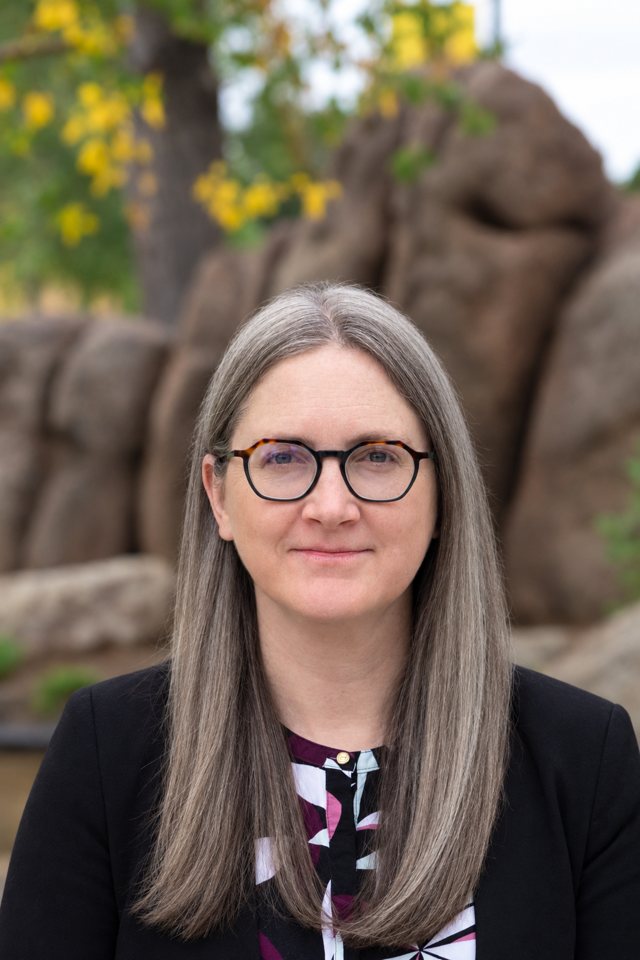
Portrait of Lorraine M. Males

About Lorraine

Before moving into teacher education, I taught mathematics and computer science for eight years in grades 6–12 in Hawai‘i, Massachusetts, and New Jersey. That classroom work still shapes what I study and how I prepare new teachers.

I study how mathematics teachers read, interpret, and use curriculum materials to plan and teach. With colleagues, I developed the Curricular Noticing framework (JRME, 2018), which describes how teachers attend to, interpret, and respond to the resources in front of them. My recent work uses eye-tracking to see planning through teachers' eyes and studies how generative AI can support high-quality lesson planning in the middle grades.

Curricular noticing

How teachers attend to, interpret, and respond to curriculum materials, and how teacher education can strengthen that sense-making.

Eye-tracking and planning

Capturing what prospective secondary teachers actually look at when they plan with textbooks and digital materials.

AI-supported lesson planning

Co-PI on NSF projects building and studying an AI colleague for middle-grade mathematics teachers, and measuring lesson plan quality.

Equity in teacher preparation

Designing modules that build critical consciousness in undergraduate mathematics teacher preparation, and countering anti-Blackness in secondary programs.

$9M+External funding
37PUBLICATIONS
60Graduate advisees completed
100+Presentations

Publications

* student collaborator

Refereed journal articles

  1. 2024
    Nucci, D., Liu, A.*, Sun, M., & Males, L. M. The professional knowledge required for high-quality AI-generated mathematics lesson planning. AMTE Connections, 34(1), 1–4.
  2. 2022
    Anderson, R. K., Weiland, T., Males, L. M., & Quaisley, K.* How four white MTEs attempted to acknowledge, act, and hold ourselves accountable for incorporating antiracism into graduate courses for teachers. Teaching for Excellence and Equity in Mathematics, 13, 60–70.
  3. 2022
    Jakopovic, P., Weiland, T., Campitelli, M., Males, L. M., & Amick, L. Supporting and retaining early career mathematics teachers using an online community of practice. The Journal of Mathematics Education at Teachers College, 33–42.
  4. 2019
    Males, L. M., & Setniker, A.* Planning with curriculum materials: Interactions between prospective secondary mathematics teachers' attention, interpretations and responses. International Journal of Educational Research, 93, 153–167.
  5. 2019
    Seiboldt, C.*, Males, L. M., & Males, J. R. Building momentum by starting small. Mathematics Teacher, 112, 269–273.
  6. 2018
    Dietiker, L., Males, L. M., Amador, J., & Earnest, D. Curricular noticing: A framework to describe teachers' interactions with curriculum materials. Journal for Research in Mathematics Education, 49, 521–532.
  7. 2016
    Smith III, J. P., Males, L. M., & Gonulates, F. Conceptual limitations in curricular presentations of area measurement: One nation's challenges. Mathematical Thinking and Learning, 239–270.
  8. 2016
    Alvey, C.*, Hudson, R. A., Newton, J., & Males, L. M. Secondary pre-service teachers' algebraic reasoning about linear equation solving. Issues in the Undergraduate Mathematics Preparation of Teachers, 1, 1–16.
  9. 2014
    Otten, S., Gilbertson, N. J., Males, L. M., & Clark, D. L. The mathematical nature of reasoning-and-proving opportunities in geometry textbooks. Mathematical Thinking and Learning, 16, 51–79.
    Most-read article in MTL, 2014
  10. 2014
    Otten, S., Males, L. M., & Gilbertson, N. J. The introduction of proof in secondary geometry textbooks. International Journal of Educational Research, 64, 107–118.
  11. 2013
    Gilbertson, N. J., Otten, S., Males, L. M., & Clark, D. L. Connecting research to practice: Reasoning-and-proving opportunities in geometry textbooks. Mathematics Teacher, 107, 138–142.
  12. 2013
    Smith III, J. P., Males, L. M., Dietiker, L. C., Lee, K., & Mosier, A. Curricular treatments of length measurement in the United States: Do they address known learning challenges? Cognition and Instruction, 31, 388–433.
  13. 2011
    Chang, K., Males, L. M., Mosier, A., & Gonulates, F. Exploring U.S. textbooks' treatment of the estimation of linear measurement. ZDM–The International Journal on Mathematics Education.
  14. 2010
    Males, L. M., Otten, S., & Herbel-Eisenmann, B. Challenges of critical colleagueship: Examining and reflecting on study group interactions. Journal of Mathematics Teacher Education, 13, 459–471.
  15. 2010
    Otten, S., Herbel-Eisenmann, B., & Males, L. M. Proof in algebra: An example of reasoning beyond examples. Mathematics Teacher, 103, 514–518.
Book and monograph chapters (6)
  1. 2024
    Quaisley, K., & Males, L. M. Lessons learned from studying the teacher intended curriculum: The value of capturing and analyzing attention. In D. R. Thompson, M. Huntley, & C. Suurtamm (Eds.), Lessons learned from research on mathematics curriculum (pp. 367–384). Information Age.
  2. 2020
    Males, L. M., Sears, R., & Lawler, B. R. Equity and justice issues in the preparation of secondary mathematics teachers. In W. G. Martin et al. (Eds.), The power of a networked improvement community to transform secondary mathematics teacher preparation (pp. 57–87). Information Age.
  3. 2018
    Kutaka, T.*, Smith, W. M., & Males, L. M. Opportunities to learn mathematics pedagogy and connect classroom learning to practice: A study of future teachers in the United States and Singapore. In M. T. Tatto et al. (Eds.), Exploring the mathematical education of teachers using TEDS-M data (pp. 279–309). Springer.
  4. 2017
    Males, L. M. Using video of peer teaching to examine 6–12 preservice teachers' noticing. In E. O. Schack et al. (Eds.), Teacher noticing: Bridging and broadening perspectives, contexts, and frameworks (pp. 91–109). Springer.
  5. 2017
    Amador, J., Males, L. M., Earnest, D., & Dietiker, L. Curricular noticing: Theory on and practice of teachers' curricular use. In E. O. Schack et al. (Eds.), Teacher noticing (pp. 427–443). Springer.
  6. 2009
    Herbel-Eisenmann, B., Cirillo, M., & Males, L. M. An argument for taking up similar work. In B. Herbel-Eisenmann & M. Cirillo (Eds.), Promoting purposeful discourse: Teacher research in mathematics classrooms (pp. 219–232). NCTM.
Recent and upcoming presentations
  1. 2027
    Males, L. M., Hassani, A., & Quist, M. Supporting teachers in using generative AI: A hands-on workshop. Association of Mathematics Teacher Educators (AMTE).
  2. 2027
    Males, L. M., Riling, M., Hennessey, L., & Liebars, C. When the curriculum isn't there: Preparing teachers to teach for understanding without aligned field placements. AMTE.
  3. 2026
    Males, L. M., Quist, M.*, Liu, A.*, Hassani, A.*, & Sun, M. A little help from my "friend": Exploring prospective teachers' use of artificial intelligence in planning. AMTE, Portland, OR.
  4. 2026
    Liu, A.*, Males, L. M., Li, M., & Sun, M. Amplifying mathematics instructional practice with AI: Real-world use cases across education contexts. AMTE, Portland, OR.
  5. 2025
    Males, L. M. Using eye-tracking technologies to support analyzing prospective teachers' curricular sense-making. NCTM Research Conference, Atlanta, GA.
  6. 2025
    Males, L. M., & Males, J. R. Putting UDL into practice in a mathematics classroom. NCTM Annual Conference workshop, Atlanta, GA.
  7. 2025
    Liu, A.*, & Males, L. M. Enhancing K–12 mathematics instruction through human–AI collaboration. AERA, Denver, CO.

Funded research

An AI-Enhanced Colleague for Teachers

Developing and studying an innovative platform for efficient, inclusive middle-grade mathematics lesson planning.

Co-PINSF DRK-12 · 2024–2028 · with University of Washington, Duquesne University, University of Maryland
$2.9M

Understanding Lesson Plan Quality of Teachers

A combined approach of computer-assisted methods and human interactions to advance middle-grade mathematics instruction.

Co-PINSF ECR CORE · 2023–2027
$1.5M

Raising Critical Consciousness in Undergraduate Mathematics Teacher Preparation

Collaborative research on the design and refinement of modules.

Lead PINSF IUSE · 2023–2025 · with NC State University, Penn State
$399,041

CAREER: Prospective Secondary Teachers Learning to Use Curriculum Materials

Examining how prospective teachers learn to use curriculum materials to plan and enact instruction.

PINSF CAREER · 2017–2022
$628,995
Earlier grants
  • NebraskaNOYCE, NSF Noyce (Co-PI)2010–2017 · $3M
  • Nebraska Partnership TEAMS, Nebraska Dept. of Education (Co-PI)2016–2017 · $1M
  • NebraskaNOYCE Phase II: Impact in High-Needs Districts, NSF Noyce (Co-PI)2014–2017 · $299,878
  • Examining Novice Teachers' Interactions with Curriculum Elements, CPM Educational Program (PI)2016–2017 · $50,453
  • Planning for the STEM Pradera Partnership, Cooper Foundation (Co-PI)2018–2019 · $3,795
  • Four UNL internal awards (Layman Award; CEHS Technology Innovation Grants)2013–2017

Affiliated researcher, IES National R&D Center on Leveraging Generative AI to Enhance K–12 Mathematics Instruction (University of Washington), 2024–present.

Teaching & Mentoring

At the University of Nebraska–Lincoln I taught across the secondary mathematics teacher preparation sequence and the graduate program, from methods and student teaching to curriculum analysis, assessment, and doctoral seminars. I received the University Distinguished Teaching Award in 2018.

Selected courses

  • High School Mathematics from an Advanced Perspective
  • Learning & Teaching Principles: Secondary Mathematics
  • Curriculum Principles & Practices: Secondary Mathematics
  • Mathematics Curriculum Analysis & Design
  • Teaching Mathematics for Social Justice
  • Mathematics Classroom Discourse
  • Assessment in Mathematics Education
  • Curriculum Deliberation, Analysis & Design
  • Student Teaching: Secondary Mathematics

Advising

  • Doctoral advisees graduated8
  • Master's advisees graduated52
  • Graduate committees26+
  • Undergraduate honors theses7

Former doctoral students now hold faculty, postdoctoral, district leadership, and teaching positions.

Honors

Education

Service & Leadership

University of Wyoming

  • Coordinator, PhD and EdD in Mathematics Education2026–
  • Co-facilitator, Academic Writing Fellows2026–
  • Faculty Research Mentor, WYO Ed Undergraduate Research2026–

Previously at UNL

  • Graduate Programs Chair, Dept. of Learning, Teaching & Teacher Ed.2024–2026
  • Coordinator, 6–12 Mathematics certification programs2013–2026
  • Julie and Henry Bauermeister Associate Professor2021–2026

Profession

  • President, Nebraska Association of Teachers of Mathematics2019–2020
  • Treasurer, AERA SIG–Research in Mathematics Education2018–2020
  • Graduate Student Mentor, AERA SIG–RME2023–2025
  • Communications Committee, AMTE2014–2017
  • NSF proposal reviewer (DRK-12, CORE, CAREER)ongoing
  • Reviewer: JRME, JMTE, MTL, Mathematics Teacher Educatorongoing

Contact

I welcome inquiries from prospective PhD and EdD students in mathematics education, research collaborators, and school partners.